Things to do around Loulé, Portugal
Top attractions near Loulé
Loulé is a vibrant town nestled in the Algarve’s inland hills, known for its market culture, charming streets, and natural surroundings. From cultural landmarks to nature escapes, there’s plenty to see just minutes from Spot na Serra.
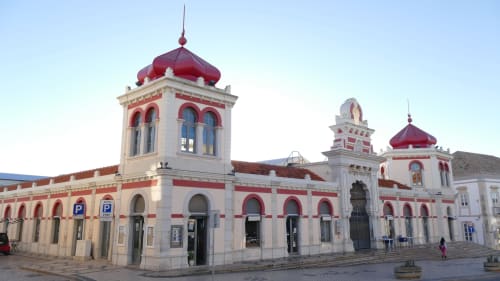
Loulé Market
Discover local flavors, crafts, and culture at one of Portugal’s most iconic markets, held in a Moorish-style building.
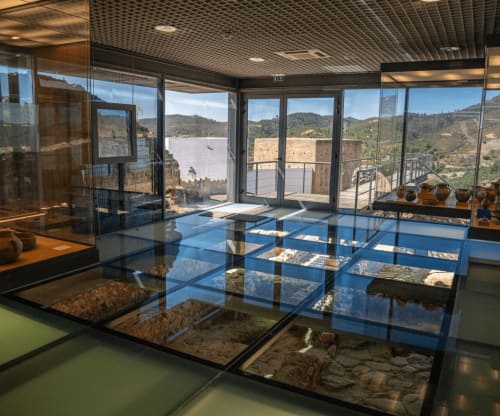
Museu Castelo de Salir
The Museu do Castelo de Salir showcases archaeological remains and artifacts from the ancient castle, offering a glimpse into the Algarve’s medieval history.
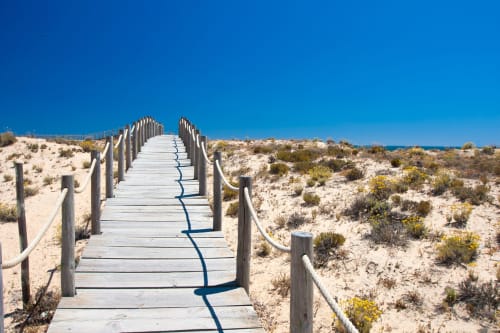
Quinta do Lago, Faro and Quarteira beaches
Algarve’s finest sandy beaches, located within 30 minutes.
Rocha da Pena
The Local Protected Landscape of Rocha da Pena is located in the parishes of Salir and Benafim, covering an area of 637 hectares at the transition between the Barrocal and the Algarve mountains. The highest point reaches 479 meters.
Over the years, the limestone rock has undergone slow chemical erosion, creating cracks and caves. The fauna and flora are highly diverse, with more than 500 plant species.
This protected landscape is home to about 30 endemic species, including Narcissus calcicola, endemic to Portugal, and Bellevalia hackelli, endemic to the Algarve’s Barrocal. There are also 122 bird species in the area, with highlights including Bonelli’s eagle, the Eurasian eagle-owl, and the common buzzard.
As for historical and built heritage, visitors can still see one of two fortifications dating back to the Iron Age, which served to defend the inhabitants who sought refuge on the plateau. There is also a chimney from 1827 and an arched doorway, both located in the village of Penina.
Over the years, the limestone rock has undergone slow chemical erosion, creating cracks and caves. The fauna and flora are highly diverse, with more than 500 plant species.
This protected landscape is home to about 30 endemic species, including Narcissus calcicola, endemic to Portugal, and Bellevalia hackelli, endemic to the Algarve’s Barrocal. There are also 122 bird species in the area, with highlights including Bonelli’s eagle, the Eurasian eagle-owl, and the common buzzard.
As for historical and built heritage, visitors can still see one of two fortifications dating back to the Iron Age, which served to defend the inhabitants who sought refuge on the plateau. There is also a chimney from 1827 and an arched doorway, both located in the village of Penina.
Alte
Alte is a picturesque village located in the heart of the Algarve, offering visitors an authentic rural experience with unmatched charm. Surrounded by stunning landscapes and green hills, Alte is known for its whitewashed houses, narrow streets, and welcoming people. Walking through Alte’s cobbled streets is like stepping into a tranquil atmosphere, far from the hustle of busier tourist areas.
Highlights include the Fonte Pequena, a natural spring and small waterfall where visitors often cool off on hot summer days, and the Parish Church of Nossa Senhora da Assunção, a must-see for those who appreciate architecture and religious history.
Travelers can also enjoy delicious Algarve cuisine in charming local restaurants, where traditional dishes and regional wines are served with genuine hospitality. For nature lovers, Alte offers several hiking trails and the chance to explore the Algarve’s stunning rural landscapes. If you are looking for a relaxing escape in an authentic village full of character, Alte is the perfect destination for a genuine and enriching experience.
Highlights include the Fonte Pequena, a natural spring and small waterfall where visitors often cool off on hot summer days, and the Parish Church of Nossa Senhora da Assunção, a must-see for those who appreciate architecture and religious history.
Travelers can also enjoy delicious Algarve cuisine in charming local restaurants, where traditional dishes and regional wines are served with genuine hospitality. For nature lovers, Alte offers several hiking trails and the chance to explore the Algarve’s stunning rural landscapes. If you are looking for a relaxing escape in an authentic village full of character, Alte is the perfect destination for a genuine and enriching experience.
São Brás de Alportel
São Brás de Alportel is a quiet Algarve town, seat of the municipality, located between the fertile soils of the Algarve’s inland region and the very popular beaches of the country’s most touristic coastal area. It is also characterized by a thriving cork industry that has developed here over time.
São Brás enchants with its traditional architecture, featuring whitewashed houses adorned with the typical lacy Algarve chimneys, where old and new stand side by side.
The town was already an important settlement during the Moorish occupation of the region, although it lost some importance during the Middle Ages. By the 19th century, it developed strongly thanks to the many cork oak plantations that spurred commercial growth, making the municipality the largest cork producer in Portugal. However, with the transfer of cork production to the country’s interior and north, the town was forced to diversify its economy in recent decades.
The village takes pride in its beautiful historic center and rich heritage, with monuments such as the Parish Church, built on the site of a former 15th-century building but reconstructed after the 1755 earthquake, and later expanded in the 19th century; the former Episcopal Palace, built in the 17th and 18th centuries as a summer retreat for the bishops of the Algarve, heavily altered in the 19th and 20th centuries, leaving only part of the main building and an eight-spout fountain; and nearby hermitages such as São Romão (dating from the 16th century) and Alportel, with a pleasant picnic park nearby.
Also very interesting is the Ethnographic Museum of Algarve Costume and the António Bentes Cultural House, housed in the 19th-century mansion of a cork magnate. Today, it exhibits an important collection of traditional Algarve costumes from the 19th and 20th centuries, as well as a section on popular religious sculpture, local vehicles, agricultural tools, and a special exhibition dedicated to the cork industry.
On Easter Sunday, the town bursts with color and flowers during the Alleluia Procession, one of the most beautiful in the Algarve, with origins in the 17th century.
Another attraction is the “Cork Route”, where visitors can learn more about the influence of this important industry throughout the region.
São Brás enchants with its traditional architecture, featuring whitewashed houses adorned with the typical lacy Algarve chimneys, where old and new stand side by side.
The town was already an important settlement during the Moorish occupation of the region, although it lost some importance during the Middle Ages. By the 19th century, it developed strongly thanks to the many cork oak plantations that spurred commercial growth, making the municipality the largest cork producer in Portugal. However, with the transfer of cork production to the country’s interior and north, the town was forced to diversify its economy in recent decades.
The village takes pride in its beautiful historic center and rich heritage, with monuments such as the Parish Church, built on the site of a former 15th-century building but reconstructed after the 1755 earthquake, and later expanded in the 19th century; the former Episcopal Palace, built in the 17th and 18th centuries as a summer retreat for the bishops of the Algarve, heavily altered in the 19th and 20th centuries, leaving only part of the main building and an eight-spout fountain; and nearby hermitages such as São Romão (dating from the 16th century) and Alportel, with a pleasant picnic park nearby.
Also very interesting is the Ethnographic Museum of Algarve Costume and the António Bentes Cultural House, housed in the 19th-century mansion of a cork magnate. Today, it exhibits an important collection of traditional Algarve costumes from the 19th and 20th centuries, as well as a section on popular religious sculpture, local vehicles, agricultural tools, and a special exhibition dedicated to the cork industry.
On Easter Sunday, the town bursts with color and flowers during the Alleluia Procession, one of the most beautiful in the Algarve, with origins in the 17th century.
Another attraction is the “Cork Route”, where visitors can learn more about the influence of this important industry throughout the region.